
Table of Contents
Of course, here is the 1800+ word SEO-optimized article you requested.
That Weird Grind in Your Lock Isn’t Just Annoying – It’s a Warning Sign
Hey there, fellow homeowner. Let’s have a real talk for a second. We’ve all been there, right? You’re fumbling with your keys after a long day, you finally get the key in the lock, and you feel it… that gritty, grinding resistance. Maybe you have to jiggle the handle just right to get the deadbolt to throw. What’s our usual move? We shrug, mutter something under our breath, and make a mental note to “get that looked at someday.”
Sound familiar? We get it. Life is busy. But here’s the thing we’ve learned from years in the locksmith business: ignoring that little grumble is like ignoring a check engine light. It’s not going to fix itself, and the eventual cost of neglect is almost always way higher than the price of a simple fix.
That subtle warning is your lock mechanism crying out for help. And if we don’t listen, we’re not just risking a minor inconvenience; we’re potentially compromising our entire first line of defense. So, let’s break down exactly what’s at stake when we decide to play the waiting game with a failing lock.
The Silent Language of a Struggling Lock
First off, how do we even know a lock is on its last legs? It’s rarely a dramatic failure right out of the gate. It speaks in whispers before it starts screaming. Here are the most common cries for help:
- The Key Becomes a Struggle: This is the big one. Your key used to slide in and out like butter, but now it feels like you’re trying to start a rusty lawnmower. It requires force, jiggling, or a weird, specific angle to work. This is a classic sign of worn-out pins and tumblers inside the cylinder.
- The Unwelcome “Jiggle”: When the key is in and the lock is supposed to be engaged, there’s still a noticeable wobble or play in the key. This often means the internal components are so worn that they’re not gripping the key properly anymore.
- The Deadbolt That Won’t Dead-bolt: You turn the key or thumb-turn, but the bolt moves sluggishly or doesn’t fully extend into the strike plate. This could be a misalignment issue, a problem with the bolt mechanism itself, or even just a buildup of dirt and debris.
- The Telltale Click (or Lack Thereof): A healthy lock has a satisfying, solid click when it engages or disengages. A failing one might make a soft, mushy sound, a grating scrape, or no sound at all—it just sort of gives up silently.
Think of these signs like a cough or a sniffle. It might just be a cold (a bit of dirt), or it could be the start of pneumonia (a complete internal failure). Would we rather find out during a calm Tuesday afternoon or at 11 PM during a downpour when we’re trying to get inside?
Beyond the Inconvenience: The Real Risks We Face
Alright, so the lock is annoying. Big deal. Why should we really care? Let’s talk about the domino effect of a neglected lock.
1. The Dreaded Lockout (At the Worst Possible Time)
This is the most common and frustrating consequence. That lock you’ve been babying for months finally decides it’s had enough. The key turns… and turns… and turns, but nothing happens. Or worse, the key snaps off inside the cylinder. Now, what was a simple lock repair service call has just escalated into a full-blown emergency locksmith situation. The cost for a lockout service outside of business hours is significantly higher, and let’s be honest, these things never happen when the sun is shining.
2. Welcome Mat for Burglars
This is the big one. A malfunctioning lock is an insecure lock. That grinding feeling? It means the tolerances inside are shot. This doesn’t just make it hard for your key to work; it can make it embarrassingly easy for a burglar to bypass it with a pick or even a bump key. A stiff deadbolt might not fully throw, meaning one good kick is all it takes to defeat your door. We’re essentially handing them an invitation. Investing in high security locks or even a timely lock re-key or lock replacement service is a lot cheaper than replacing a stolen laptop collection or, heaven forbid, dealing with the violation of a break-in.
3. Turning a Small Fix into a Major Expense
This is the financial reality that hurts the most. That little grinding issue we ignored? It’s been causing metal-on-metal wear every single time we use the key. We might have started with a simple lock repair service that required a quick cleaning and lubrication. But by ignoring it, we’ve likely ground down the internal pins, damaged the keyway, and worn out the cylinder. Now, a repair is off the table, and we need a complete lock installation. The small price of maintenance has ballooned into the much higher cost of a full replacement.
4. The Domino Effect on Your Door
A misaligned or sticking lock forces us to use excessive pressure. We’re not just straining the lock; we’re straining the entire door system. This can loosen the screws in the strike plate, warp the door frame, and damage the hinges. Suddenly, our simple lock problem requires a door locks service that addresses multiple points of failure. Talk about a cascade of issues!
So, What Are Our Options? A Quick Guide
When we finally decide to address the issue, we generally have three paths we can take. The right choice depends on the severity of the damage and our security goals.
- Lock Rekeying: This is where a local locksmith like us at Pick4 Locksmith changes the internal pins and springs of the existing lock so that it works with a new key. It’s a fantastic, cost-effective option if the lock body itself is still in good condition but we’ve lost a key or want to ensure old keys (from previous tenants, contractors, etc.) no longer work. It’s a core part of our lock change services.
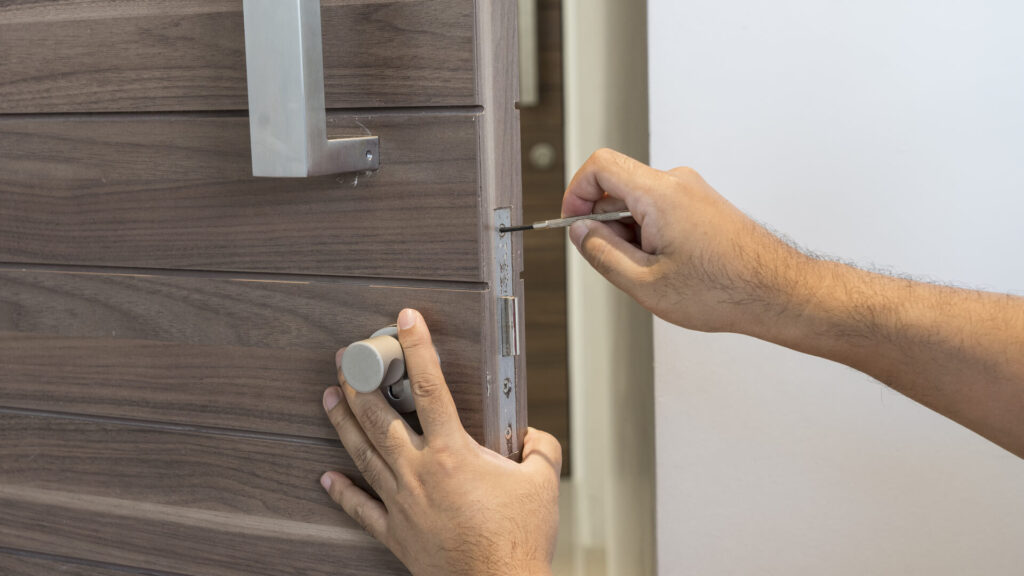
- Lock Repair: If the issue is minor—like dirt, debris, or a slight misalignment—a skilled mobile locksmith can often disassemble the lock, clean it, lubricate it with the proper materials (not WD-40, that actually makes it worse long-term!), and get it working smoothly again. This is the most affordable route if the damage isn’t severe.
- Lock Replacement: This is the most comprehensive solution. We remove the old, failing lock entirely and install a brand-new one. This is our best bet if the lock is heavily worn, damaged, or just outdated. It’s our chance to upgrade to modern high security locks, add a deadbolt installation for a door that doesn’t have one, or even integrate a new lock into a master key lock system for a business.
Here’s a quick table to help us visualize the best path:
| Symptom | Likely Cause | Recommended Solution | Why It’s the Best Move |
|---|---|---|---|
| Key is hard to turn | Dirt, debris, or slight internal wear | Lock Repair Service | Prevents further damage and is the most affordable fix. |
| Key turns but doesn’t unlock | Severe internal wear or broken mechanism | Lock Replacement Services | The lock is already failed; repair is not possible or cost-effective. |
| Lost keys or moved into a new place | Unknown key circulation | Lock Re Key | Affordable way to guarantee only your new keys work. |
| Lock feels loose, wobbly | Worn-out cylinder or housing | Lock Installation (Replacement) | Restores physical security and eliminates the easy bypass. |
| Want to upgrade security | Outdated technology | High Security Locks Installation | Drastically improves resistance to picking, drilling, and bumping. |
Beyond the Front Door: This Applies Everywhere
While we’ve been mostly talking about our home’s front door, the same principles apply to every lock in our lives.
- Car Locksmith: That sticky auto locksmith key fob or difficult car door lock? Ignoring it could lead to being stranded in a parking lot. A car locksmith can address these issues before they leave us calling for an emergency mobile locksmith.
- Commercial Locksmith: For a business, a failing lock isn’t just an inconvenience; it’s a liability. A business lockout costs you time and money. A faulty panic bar installation or door closer could even be a fire code violation. Regular commercial locksmith maintenance is crucial.
- The Little Things: Even file cabinet locks or mailbox locks replacement matter. A broken file cabinet lock can expose sensitive documents, and a compromised mailbox is an identity theft risk waiting to happen.
Your Local First Line of Defense: Why Choose Us?
Look, we know you can search for “locksmith near me” and get a thousand results. So why call Pick4 Locksmith here in Markham? Because we’re not just a dispatcher; we’re your neighbors. We’ve served folks in Markham, Greensborough, and the surrounding areas for years, and we’ve built our reputation on being the honest, reliable locksmith company services you can count on.
Whether you need a routine deadbolt installation, a lock repair service, or you’re in a full-blown panic and need a 24 hour locksmith, we’re here. Our team of residential locksmith and commercial locksmith experts shows up in a fully stocked van, so we almost always fix the problem on the spot. No upsells, no hidden fees—just a clear, honest price and a job done right the first time.
We don’t just want to be your emergency call; we want to be your partner in prevention. A quick check-up on your locks can save you a world of hassle later.
Wrapping It Up: Don’t Wait for the Breakdown
The moral of the story is simple: that little grind in your lock isn’t just an annoyance to be tolerated. It’s a clear, unambiguous signal that something is wrong. Listening to that signal early is the difference between a small, planned maintenance fee and a large, stressful emergency repair bill—or worse, a security disaster.
So, let’s make a pact to stop ignoring the signs. Let’s be proactive about our security. And if you’re anywhere in the Markham area and that lock is starting to sing its sad, grinding song, you know who to call. Give Pick4 Locksmith a ring. Let’s get it sorted before the lock decides to quit on its own terms.
Frequently Asked Questions (FAQs)
Q1: I sprayed WD-40 in my sticky lock and now it’s worse! What happened?
Ah, a classic mistake! WD-40 is a great water-displacer and penetrant, but it’s not a lubricant. It’s petroleum-based and over time, it actually attracts dust and grit, creating a sticky, grinding paste inside your lock that’s worse than the original problem. A proper lock repair service involves using graphite-based or Teflon-based lubricants designed specifically for locks.
Q2: How often should I actually maintain or replace my locks?
There’s no hard and fast rule, but a good guideline is to have them professionally checked every few years. Of course, address issues as they arise. You should absolutely plan for lock replacement services if your locks are over 10 years old, if you’ve lost keys, or if you’ve just moved into a new place. Think of it as routine maintenance, just like changing the batteries in your smoke detectors.
Q3: My key broke off in the lock! What should I do first?
First, don’t panic. Second, do not try to remove it yourself with pliers or tweezers—you’ll almost certainly push the broken piece deeper, making the problem much worse. Your best move is to stop and call a professional emergency locksmith like Pick4 Locksmith. We have specialized extraction tools to safely remove the broken key without damaging the lock cylinder, often saving you the cost of a full replacement.
